THE BALANCE


I major in architecture and create
dance workshops
that explore architecture x movement
Studied Bouwkunde (Architecture)
building engineering
2023-2026 in Dutch
7 years of contemporary
dance and figure skating
Born in Seoul,
raised in the Netherlands
and Germany
6. Bachelor of Architecture ...
... University of Melbourne 2025
5. LDE Sustainability
Honours Programme ...
... TU Delft, Leiden University, Erasmus
University 2024 - 2025
4. Bachelor of Science in Architecture ...
... TU Delft 2023 - 2026
3. International Baccalaureate (IB)
Diploma ...
... Frankfurt International School
2017 - 2023
2. Investin - Architecture ...
... London 2022
1. Global Online Academy - Architecture ...
... Remote 2021
Do you have any input?
Or just want to keep in contact?
Email is best to keep it organized!
Reach me at v0ault.ma [at] gmail [dot] com


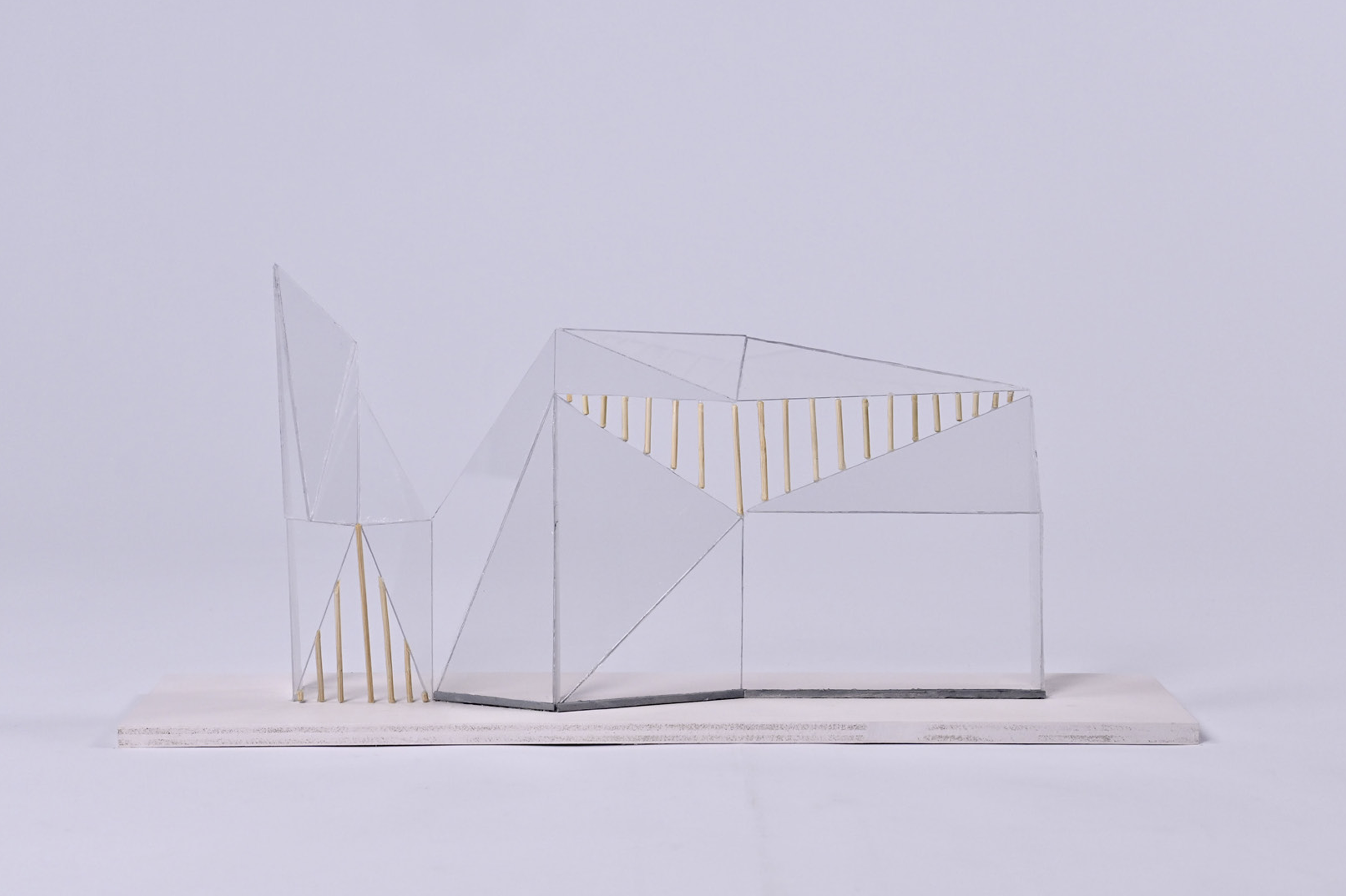
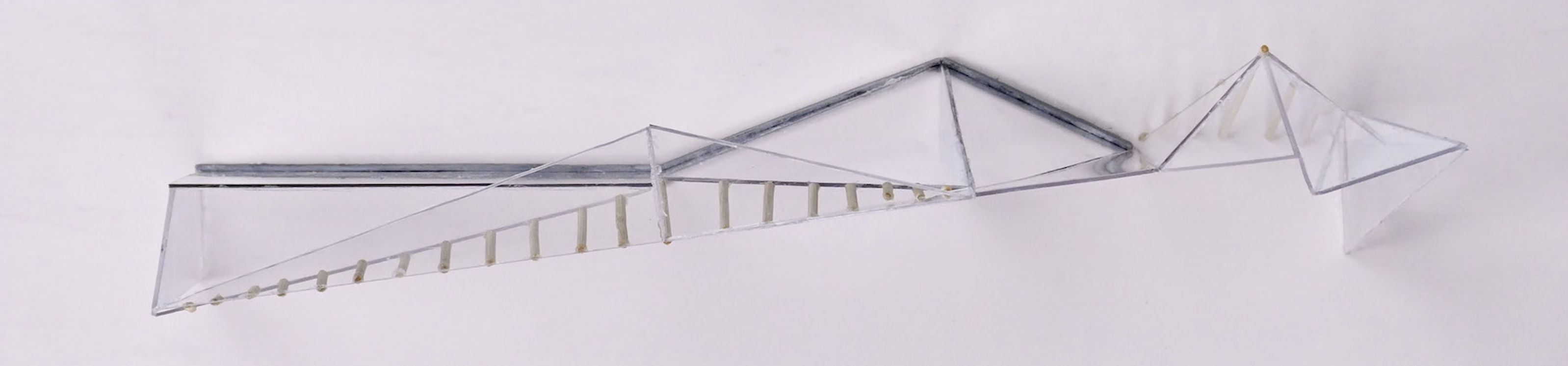
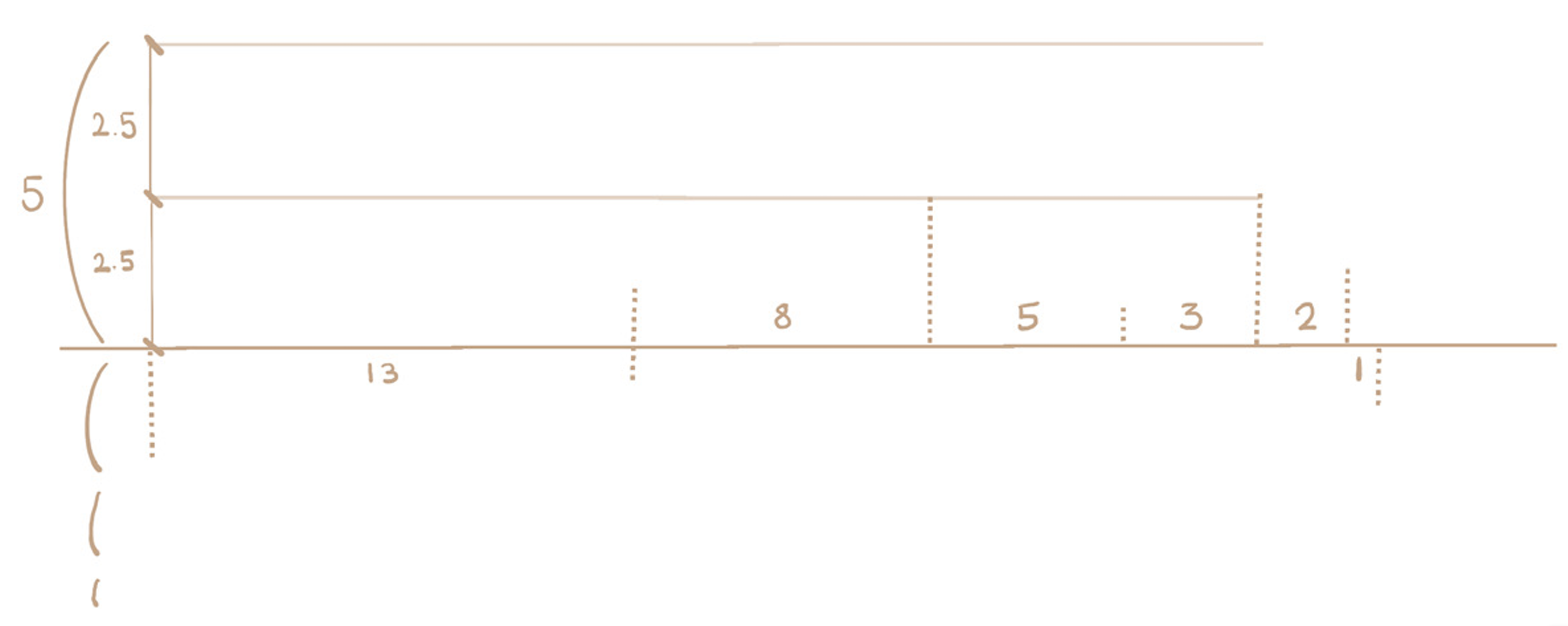
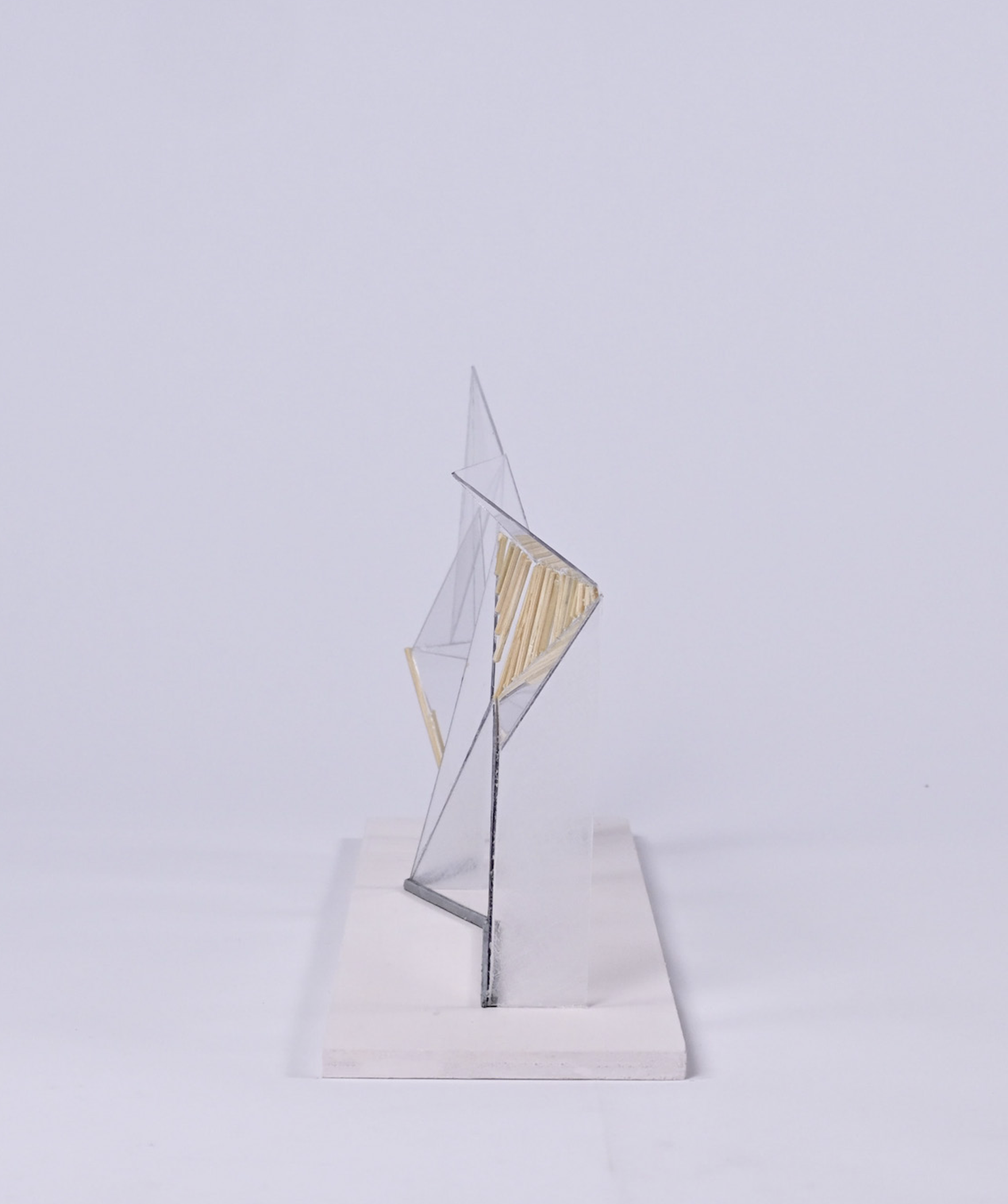
To translate the mathematical beauty of the Fibonacci sequence into a sculptural, translucent wall, exploring the relationship between natural proportions, spatial depth in a continuous form.
To achieve this sculptural structure, acrylic panels were cut into triangles to replicate glass panes which then were positioned protruding beyond a single z-y plane in the fibonacci sequence. Each triangle was carefuly measured for not only its height but its distance across the horizontal plane to give the wall a greater volume than simply its glass thickness. In addition, the vertical glass walls are linked framelessly with three hand etched panel of arcylic, replicating translucent glass, appearing as a separate element from the transparent front wall glass.


Affected by the weight of hard plastic, the plant continues to grow. Though its restraining materials are static, the plant continues to breathe. Both are containers, the internet box and the plant pot. One stores nanoscopic components, the other stores microscopic cells. It's quite clear which container holds an adaptive object.


Custom Teo (터) is an attempt to translate the user's story into an embodied home that belongs to them. Through having conversations, the architect becomes the human translator between the users' stories and AI generated visuals.
< It would be nice to relax and check in on my friends and family
< Pop of color
< Love a lively festival like the lantern festival
< Faster access to appliances
< Collective responsibility
< Privacy
Sustainability is a widely researched topic in architecture. The construction industry is responsible for a fraction of the total emissions damaging the environment. Therefore this sector attempts to find material solutions and construction solutions to reduce the carbon footprint and make building that use passive energy which will sustain. Others say to be sustainable is to provide efficient solutions to protect people. Therefore concrete is a material that is simple and widely available at low costs. If it produces emissions, it helps sustain the economy and the people short term. If it reduces emissions, it requires huge investment, damages existing industries and is complex. But that’s why it is a difficult topic, to find something that has no negative externalities.
The influence of AI in education should be discussed with more transparency. In education, AI is most tempting and risky, where it takes young learning minds for granted. Where people sign up to learn critical thinking and problem solving skills, using AI to get away with a short term solution can take away our potential as the next generation.
Before the invention of calculators humans identified a need for a gadget that calculates quickly, and to fulfill that human desire, calculators were invented by innovative thinkers. We use calculators when we finish school because it is faster, though we understand the reasoning behind some basic math concepts. We don’t use calculators for every life task, it is just suited to simply ‘make calculating faster.’
That is the crux. After training students through educational institutions, AI should be used to speed up basic tasks. But for sustained and healthy usage, humans should work on building critical thinking skills. This way, we can make conclusions based on the AI outputs we get.
Studies from Harvard and health organisations have carried out tests to observe how AI can assist critical thinking skills of students. The methods used in these tests were successful because the AI was set to not give answers but challenge the students. This education mode on the AI would be an appropriate way to use AI when learning whether we have it on our devices or even in our brains (prediction).
Of course AI has immense potential of solving problems through pattern recognition and a set of data. But if we still want to be in charge of handling these technologies, we must be critical and knowledgeable to be at the forefront of the technology. This is why when learning to gain expertise, we must train how to be critical thinkers rather than be dependent on what the AI outputs, even if it is correct. Otherwise it’s almost as feeding a young brain information that is restricted to a few boxes / biases, dissolving the human’s ability to perceive, and react uniquely.
Min Jin Lee, author of Pachinko states: If you have someone turn a dial but then divide up those tasks then the time and the money that‘s saved goes to the one who owns the task/the company.
This is a crisis for learners because they’re not getting chances.
Efficiency can offer much, but we will miss a bigger picture. “As we become more and more deskilled, more and more people are upskilling -> (Upskilling is the process of improving employee skill sets through training and development programs to minimize skill gaps and prepare employees for the new jobs or roles: IBM).”
I am writing this because AI emerged in the years while being a student and being in the industry.
Using AI is taking the escalator instead of taking the stairs, it can easily make one become dependent on it and students who are less privileged of getting good education are more prone to this dependency. We won’t use the stairs that often but if you are abled, we should learn how to walk up the stairs, before we don’t know how to walk ourselves up a pair of stairs anymore.
It gets us moving and thinking.
Now for the creation part:
This topic has become an everyday thought since I have a deep passion for architecture. There’s mixed opinions in the arts / non arts and I wanted to clarify some misunderstandings. The architecture faculty is the best place to hear two opposing views of AI in one hallway. I heard that AI will take away the job of an artist, but rather than this, I would say AI is a genre of ‘disguised art’ that increases the value of human made art.
Art, music, dance, theatre will always be a part of our lives. Most artists reject AI and this is where non artists might assume AI is a cheat code for creating art. But that doesn’t mean artists should throw AI out the window. I saw a poster ruling out the guidelines for using AI in an art class. It stated to use AI to gather inspiration. While I do think this is effective, it only goes as far as researching past cases, or taking from precedents. In architecture, most people do this and it results in a working solution that is socially accepted. What I observe though, is that this does not train an art student to be creative. Creativity is different from gaining information where it does not come from gathering already existing ideas. It comes from the ability of the mind to ponder and given the instantaneous impulse to create.
I want to emphasise that in creating art, the “why” should always be relevant, more so if it is something emotional. In the process of creation, we give reason to thousands of decisions on the canvas, and these can all be reasons related to embodiment which are unique to humans.
The same story goes with the tool to sing, the tool to build, the tool to draw, the tool to dance. We can make AI do this with technology that continues to develop, but whether its the human maker or the AI tool, it won’t create anything original derived by human desire. A living human with lived experiences who trains to be the creator will sustain and bring out valuable art.
And there are different ways to train where AI image generation is their tool, AI voice is their tool, whether its their hand and a paintbrush or their own voice or their hand and the computer mouse. It is the original thought and reasoning that matters behind it.
To fulfill the engagement and comfort of every unique person, artist must continue to be the masterminds of creativity. Using full AI is like “asking a cnc machine to make all the structures in the world.”
coming soon

